
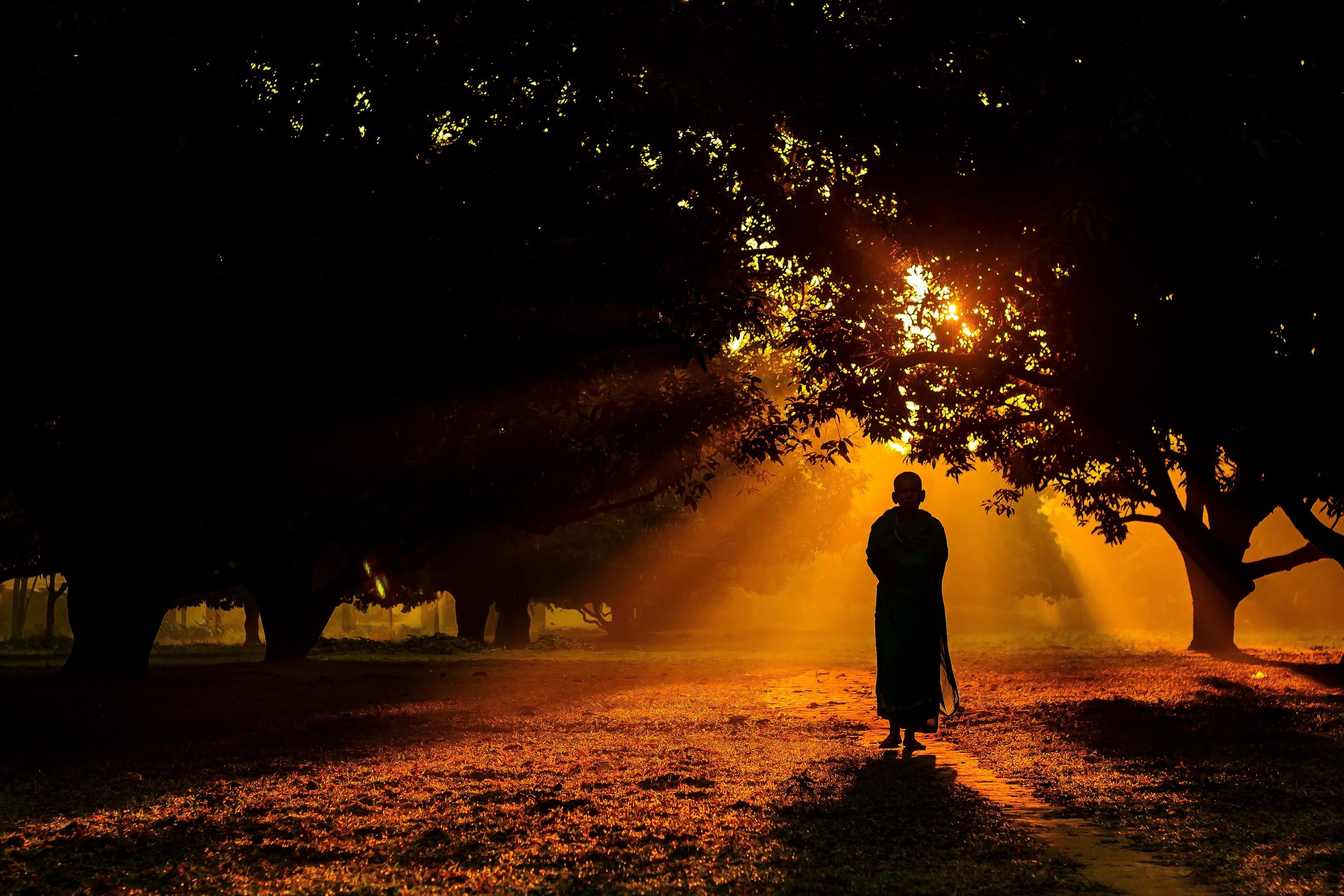
END LONELINESS
"If you're lonely when you're alone, you're in bad company." Jean-Paul Sartre
Loneliness is the feeling of being emotionally or socially disconnected from others, regardless of how many people may be around you. It is different from simply being alone. A person can enjoy solitude and feel perfectly content in their own company, while someone surrounded by people can still experience loneliness if they do not feel understood, accepted, or emotionally connected. Loneliness can affect both emotional and physical well-being and has been associated with an increased risk of depression, anxiety, poor sleep, and other health concerns. However, experiencing loneliness is not a sign of weakness or personal failure. Instead, it can be understood as a signal that an important need for meaningful human connection is not being fulfilled. Loneliness often involves several different experiences, such as:
Feeling as though no one truly understands you.
Wanting deeper or more meaningful relationships.
Feeling isolated, excluded, or emotionally disconnected.
Longing for companionship, intimacy, or a sense of belonging.
Although loneliness and solitude both involve spending time alone, they are fundamentally different experiences. Loneliness is an unwanted sense of disconnection, often accompanied by sadness, emptiness, or a desire for companionship. Solitude, by contrast, is usually a chosen experience that can provide opportunities for peace, relaxation, creativity, and self-reflection. As social beings, humans naturally seek connection, communication, and emotional intimacy. At the same time, learning to appreciate and enjoy our own company can help us develop a healthier relationship with ourselves. When we become comfortable with who we are, being alone does not necessarily have to feel lonely. True well-being comes from finding a balance between meaningful relationships with others and a sense of comfort within ourselves.
WHAT IS LONELINESS
Start by listening to the audio session, then watch the short video(s).
Refer to session BORDOME for ideas
PREPARATION
GUIDED SESSION

Use headphones for optimal sound
Richard Proenneke lived alone in the Alaskan wilderness for nearly 30 years, beginning in 1968. He filmed his experiences giving his relatives a glimpse into his life in Alaska, including building his cabin, hunting for food, and exploring the surrounding wilderness. In 1999, he left Twin Lakes for the final time. Today, his cabin is preserved as part of Lake Clark National Park.
Solitude can provide opportunities for peace, relaxation, creativity, and self-reflection.
Become Your Own Best Friend
The clinical significance of loneliness. Liesl M. Heinrich, et. al. Clinical Psychology Review. V. 26, Issue 6. P. 695-718. October 2006.
Loneliness. Cacioppo, J. T., et.al. Handbook of individual differences in social behavior. The Guilford Press. P. 227–240. (2009).
Risk factors for loneliness. Martina Barjaková, et.al. Social Science & Medicine. Article: 116163. V. 334. October 2023.
A review of loneliness: concept and definitions, determinants and consequences. Jenny de Jong Gierveld. Cambridge University Press. 01 February 1998.
Evolutionary mechanisms for loneliness. John T. Cacioppo, et.al. Cognition and Emotion. V. 28, 2014 - Issue 1. Pages 3-21