
“The two most important days in your life are the day you are born and the day you find out why" Mark Twain
MEANING OF LIFE
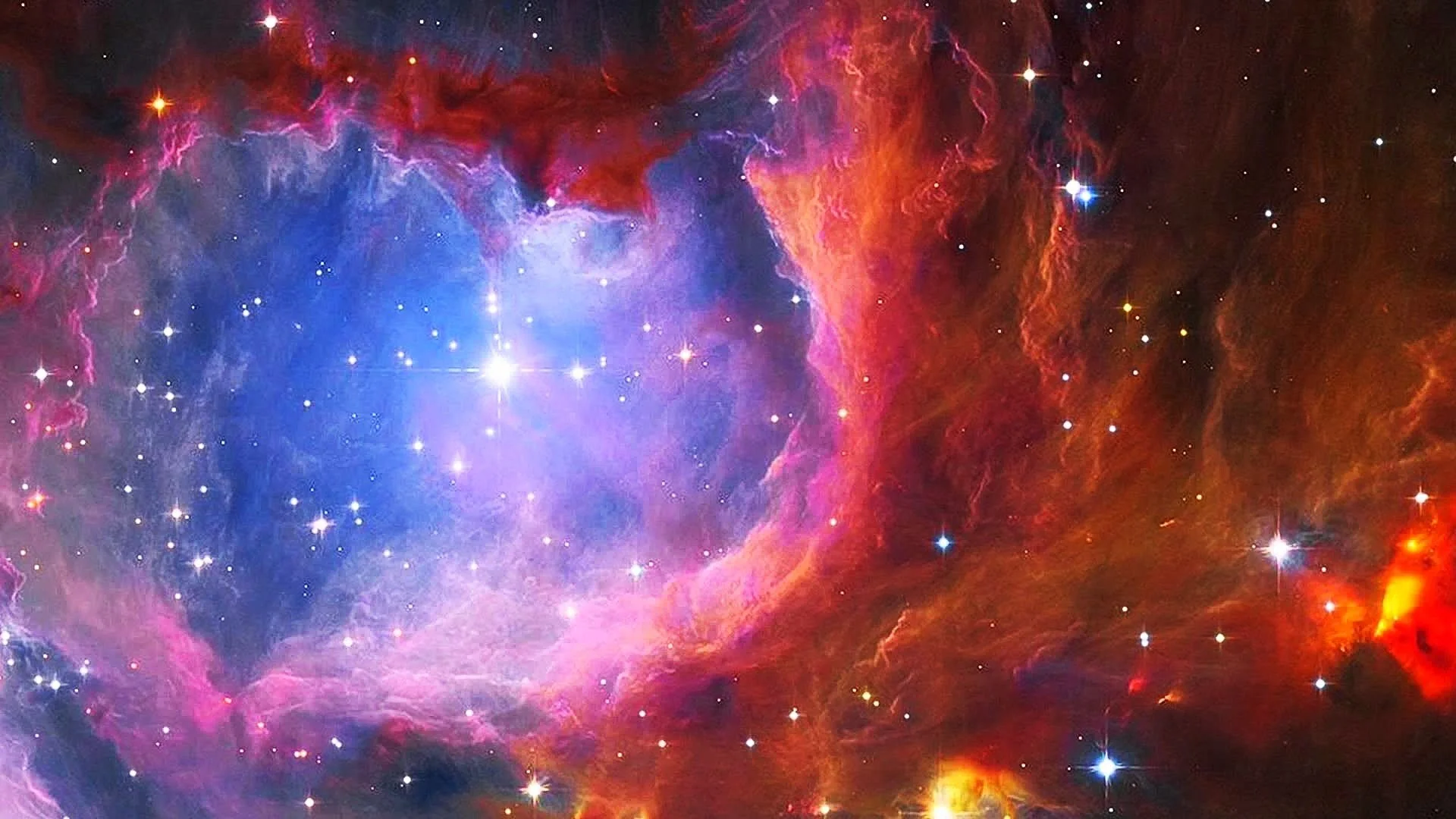
Throughout history, human beings have asked some of the most profound questions imaginable: What is the meaning of life? What is it all about? Why are we here? What is the purpose of our existence? In our search for meaning, we encounter not only questions but also mysteries that reach the very foundations of reality. Many religious and spiritual traditions teach that life comes from a higher power and that its meaning is found in loving, serving, and glorifying God. From this perspective, our existence has a purpose that extends beyond the individual and is rooted in a relationship with the divine. Existentialist thinkers, by contrast, have argued that life has no predetermined meaning. Meaning is something we create through our choices, relationships, responsibilities, and commitments. We give significance to our existence through the way we choose to live. From a biological perspective, science describes life in terms of survival, adaptation, reproduction, and the transmission of genetic information. Evolution does not necessarily answer the philosophical question of why we exist, but it helps somewhat to explain how life has persisted and diversified over billions of years. Long before modern science, ancient tribes and warriors would gather beneath the night sky. As they looked upward at the stars, they too must have confronted the unimaginable vastness of the universe and wondered about their place within it. The same sky that inspired ancient myths and religions continues to raise questions for modern cosmology. Yet the mystery becomes even deeper when we move from the vastness of the universe to the smallest scales of reality. At the quantum level, nature behaves very differently from the solid, tangible world of everyday experience. At the quantum level, particles such as quarks are not tiny solid objects. They are excitations of quantum fields and behave like waves. If we are to explore the meaning of life more deeply, perhaps we must first understand the nature of life itself, and the universe in which life exists. We must look outward, into the cosmology of the universe, and inward, into the quantum structure of matter. But the search cannot stop there. We must also examine the evolution of the brain, the extraordinary complexity of neurons and neural networks, and perhaps the greatest mystery of all: the nature of consciousness and the mind. The search for meaning therefore becomes a journey across multiple levels of reality, from the birth and evolution of the universe to the fundamental structure of matter, to the emergence of life, the evolution of the brain, and ultimately the conscious mind that asks the question in the first place.
WHAT IS THE MEANING OF LIFE
Take a pen and paper and write down your thoughts.
Start by listening to the audio session, then watch the short video(s).
PREPARATION
GUIDED SESSION

Unimaginable Vastness of the Universe
Use headphones for optimal sound
Smallest Scales of Reality
The Science of Meaning in Life. Laura A. King, et. al. Annual Review of Psychology. V. 72:561-584.2020.
Meaning in Life and Mortality. Neal Krause. The Journals of Gerontology. Series B. V. 64B, Issue 4. P. 517–527. 2009.
Meaning in Life and Meaning of Life in Mental Health Care: An Integrative Literature Review. Xanthe Glaw, et.al. Issues in Mental Health Nursing. V. 38. Issue 3. P. 243-252. 2016.
The Development of Meaning in Life. John Battista, et.al. Interpersonal and Biological Processes. V. 36, Issue 4. P 409-427. 1973.
On the psychology of meaning of life. Auhagen, Ann Elisabeth. Swiss Journal of Psychology. 59(1), 34–48. 2000.
The meaning in life questionnaire: Assessing the presence of and search for meaning in life. Steger, Michael F. et.al. Journal of Counseling Psychology. 53(1), 80–93. 2006.